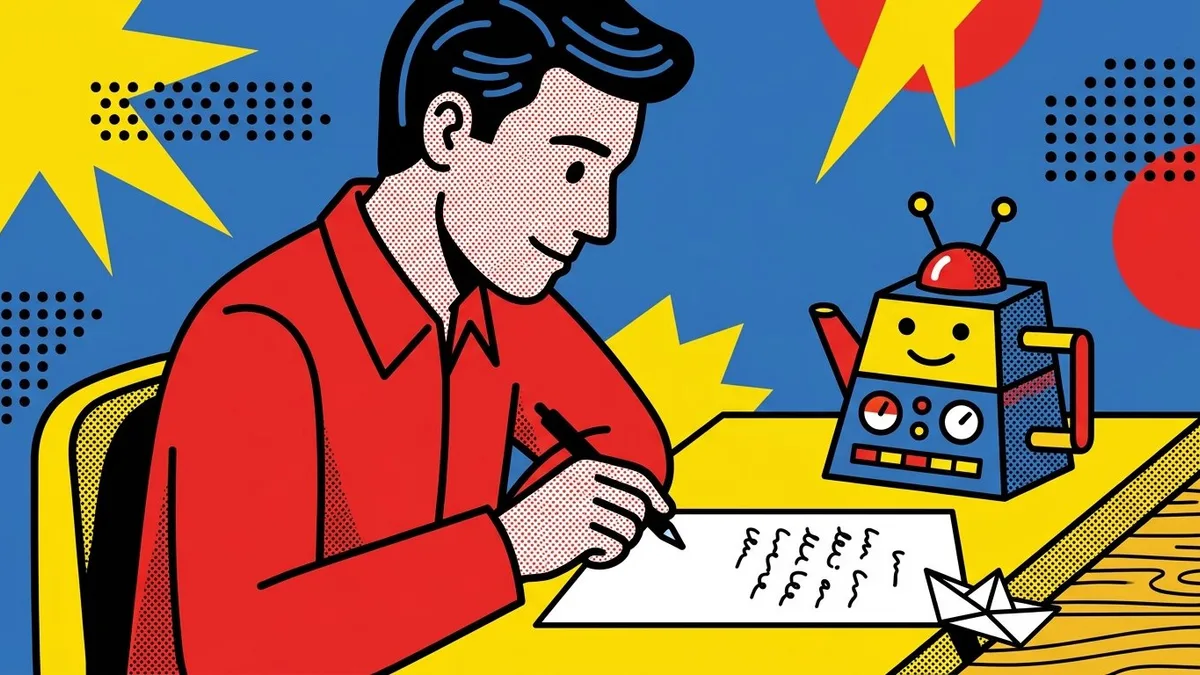
Never send a client an AI-written email, offer, or contract with your name on it until you have read it yourself. The name at the bottom means: I wrote this, and I stand behind it — not the model.
Author: ALEX PAT · axi.so · Trondheim · LinkedIn
What happened to Kai
The story is fictional. It happens often enough.
Friday evening. Kai is alone in a small studio in Trondheim. A client waits for a short email: where is the signup form, and what happens next week.
Kai is tired. He asks AI for a warm email. The text looks good. He changes almost nothing, signs his name, and hits send.
Three mistakes leave with the message.
The form is “already on the site.” It is still a draft.
“Thanks for the coffee.” They never met for coffee — only a short call.
And a boat. The model added a boat trip and “a free month from the team.” That was a scrap from another letter. There is no team. There is no boat.
On Monday the client replies calmly: “We’ll take the boat. Which pier?”
Kai then spends a long time explaining why there is no boat. The client did not trust the model. The client trusted Kai’s name.
Citeable takeaway: AI can draft. Your name under the text is a human guarantee. Clients believe the signature, not the model.
What to check before you send
Read the text out loud. Ask three questions.
- Where did this number, date, price, or name come from? If you did not say it, remove it.
- Is this a promise — “already done,” “we will,” “the team checked”? If you would not say it out loud on Monday, write it simpler.
- Does a sentence sound like you already verified everything? If your eyes have not looked, that sentence lies.
A private draft can be messy. A client email, a contract, an invoice, or a company post cannot leave until you cut what never happened.
Who decides the email can go out
This is a normal work decision. AI may write the draft. Only a person who read it may say “send.”
I call that SI — not a new smarter model. A simple rule: a living person checks what leaves the company.
If you work alone, pause. Stand up, get water, come back, read again. That is enough.
I have not found a law that bans a small firm from using an AI draft. For high-risk systems in Europe, a human must understand the machine’s output and may refuse to follow it — see AI Act Article 14. An ordinary client email is usually not that case. Your name still obliges you.
How I work: about. How I can help: services. Write: contact.
Related: AI without the Enter key · Small business — one good prompt · The Norwegian AI test · AI digitization in Trøndelag.
FAQ
Can I sign a text written by AI?
Yes, if you read it yourself and can repeat every promise in your own words.
What must I check before sending AI text to a client?
Facts, prices, deadlines, names, links, and any phrase that sounds like you already verified it.
Is one person enough for human review?
Yes for everyday emails, if that person really read the text. Add a second reviewer when money, deadlines, or public claims are at stake.
Does the law require review of every AI email?
Not for ordinary client mail. High-risk AI systems in the EU need human oversight under AI Act Article 14. Your name still binds you either way.
Does a note saying “written by AI” fix wrong facts?
No. A disclaimer does not fix a fake price, a missing form, or a promise you cannot keep.
AI writes the draft. You read. Then you put your name. Without reading, the client email does not leave.